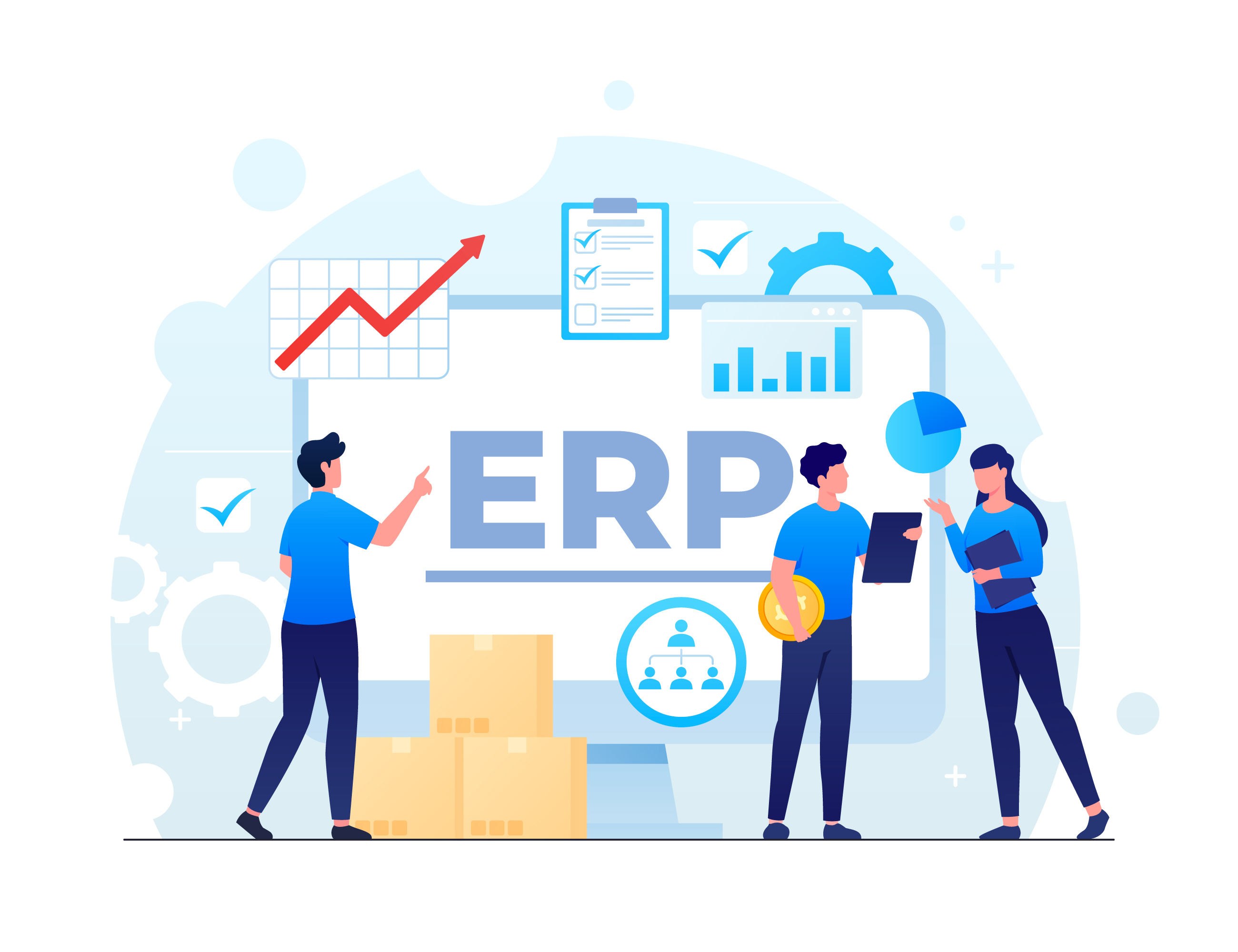
Odoo Services and ERPs- Complete Implementation, Customization & Integration Guide for Growing Businesses
What Are Odoo Services and ERPs?
If you've ever tried managing your sales pipeline in
one tool, your inventory in another, your accounting in a spreadsheet, and your
HR records somewhere else entirely — you already understand the problem that
ERP software was built to solve.
An ERP (Enterprise Resource Planning) system
brings all your core business operations into one unified platform. No more
switching between disconnected apps, reconciling data across systems, or losing
hours to manual processes that should run automatically.
Odoo is one of the most widely adopted ERP platforms in the world — and for
good reason. It's open-source, modular, and genuinely flexible in ways that
most legacy ERP systems aren't. Instead of buying a massive system and hoping
most of it applies to your business, Odoo lets you start with the modules you
need and expand as your operations grow.
Odoo services refer to the professional support businesses need to get the most out
of the platform: implementation, customization, integration with existing
tools, migration from legacy systems, and ongoing technical support. Done
right, Odoo doesn't just replace your old software — it transforms how your
business runs.
Why Businesses Choose Odoo ERP Solutions
There's no shortage of ERP options on the market. So
what makes Odoo the choice for hundreds of thousands of businesses across more
than 100 countries?
Centralized operations and data visibility is the first answer. When every department — sales, finance, warehouse,
HR, operates on the same platform, your data tells a complete story. Management
decisions stop being based on guesswork and start being backed by real-time
information.
Cost efficiency compared to traditional
ERPs is the second. Legacy enterprise systems like SAP or
Oracle come with licensing costs, complex infrastructure requirements, and
implementation fees that often run into six or seven figures. Odoo's
open-source foundation keeps costs accessible for SMEs while still delivering
enterprise-level functionality.
Scalability for both SMEs and enterprises is what makes Odoo particularly compelling for growing businesses.
You're not locked into a feature set that either overwhelms you now or limits
you later. The modular ERP system architecture means your platform grows
alongside your business — not against it.
Core Odoo Services Explained:
Understanding which Odoo services your business needs
is the starting point for any successful ERP project.
Odoo Implementation Services
Implementation is where it all begins. A proper Odoo implementation service
starts with deep business analysis — mapping your current workflows,
identifying inefficiencies, and defining exactly what success looks like before
a single configuration is touched.
This phase covers module selection, system
configuration, user role setup, and deployment strategy. The two primary
deployment options are cloud-based (lower upfront cost, faster
deployment, managed infrastructure) and on-premises (greater control,
useful for businesses with specific data governance requirements). An
experienced implementation partner helps you choose the right path based on
your industry, team size, and long-term goals.
The quality of your implementation directly determines the ROI of your Odoo investment. A rushed or poorly scoped deployment creates technical debt that costs far more to fix later than to prevent upfront.

Odoo ERP Customization Services:
Out-of-the-box Odoo is powerful. But most businesses
have processes, approval workflows, or reporting requirements that don't map
perfectly to standard configurations — and that's where Odoo
ERP customization becomes essential.
Workflow customization involves adjusting how tasks
move through your system: approval chains, automated notifications, status
triggers, and process rules that reflect how your teams work. Custom module
development goes further, building entirely new functionality within the Odoo
framework when no existing module meets the requirement.
The key distinction with good customization is that it
enhances Odoo without compromising upgradability. A skilled development team
builds custom features in a way that won't break when Odoo releases a new
version — a critical consideration for long-term system health.
Odoo Integration Services
Most businesses don't operate in a vacuum. You likely
have an existing eCommerce platform, a payment gateway, a third-party CRM, a
shipping provider, or industry-specific software that needs to talk to your
ERP.
Odoo integration services connect the platform to your existing ecosystem using APIs, webhooks,
and middleware tools. Common integrations include eCommerce platforms like
Shopify and WooCommerce, payment processors, logistics and shipping systems,
marketing automation tools, and custom internal databases.
The real value is in data synchronization — ensuring
that a sale made on your website, a shipment triggered in your warehouse, and
an invoice generated in your accounting module all happen in sequence,
automatically, without manual intervention.
Odoo Migration Services
If you're currently running on a legacy ERP, a dated
custom system, or a collection of disconnected tools, migration to Odoo
requires careful planning. This isn't just a data transfer — it's a structural
transition.
Good migration services include a full audit of
your existing data, a mapping exercise to align old data structures with Odoo's
architecture, data cleansing to remove duplicates and inconsistencies, and
rigorous validation testing before go-live. The goal is that on day one of
operating in Odoo, your historical data is accurate, accessible, and structured
in a way that supports clean reporting going forward.
Key Modules in Odoo ERP Systems
Odoo's modular structure is one of its defining
strengths. Here's a look at the core modules most growing businesses implement:
|
Module |
Key Functions |
|
CRM & Sales |
Lead tracking, pipeline management, sales
automation, customer communications |
|
Inventory & Supply Chain |
Stock management, warehouse operations,
reorder rules, vendor management |
|
Accounting & Finance |
Invoicing, expense tracking, bank
reconciliation, financial reporting |
|
HR & Payroll |
Employee records, leave management,
payroll processing, performance tracking |
|
eCommerce |
Online store management, product catalogue,
order processing |
|
Manufacturing |
Production orders, bill of materials,
quality control |
|
Project Management |
Task tracking, timesheets, resource
allocation, Gantt charts |
What makes this powerful is integration by design. A
sales order in the CRM module automatically triggers inventory checks,
generates a delivery order, and creates an invoice — all without manual handoff
between departments. This is business process automation at its most
practical.

Step-by-Step Odoo ERP Implementation Process
A successful Odoo deployment follows a defined
process. Here's how a professional implementation typically unfolds:
1. Requirement Gathering — Workshops with key stakeholders from each department to document
current processes, pain points, and goals. This phase produces a formal scope
document that guides the entire project.
2. System Configuration — Modules are installed, workflows are configured, user roles and
permissions are set, and the system is populated with master data (products,
customers, vendors, chart of accounts).
3. Testing and QA — Before go-live, the system is put through rigorous testing:
functional testing of each module, integration testing between connected
systems, and user acceptance testing (UAT) with your actual team.
4. Go-Live and Support — The production environment is activated. A proper go-live includes
parallel running where possible, real-time monitoring for the first few days,
and immediate access to support for any issues that surface in live operations.
5. Ongoing Optimization — Post-implementation, the best Odoo partners continue working with you
to refine processes, add modules as needs evolve, and ensure the system is
delivering the efficiency gains it was designed to produce.
Benefits of Odoo Services for Businesses:
The case for Odoo ERP, when implemented properly, is
straightforward:
Reduced operational costs come from eliminating redundant software subscriptions, reducing manual
labour through automation, and preventing the costly errors that come from
disconnected data entry across multiple systems.
Real-time business insights mean leadership teams aren't waiting for end-of-month reports to
understand how the business is performing. Dashboards, live inventory counts,
and financial summaries are available on demand — giving decision-makers the
information they need when it matters.
Improved team productivity is the compounding benefit. When your people aren't hunting for
information, re-entering data, or navigating between six different tools to
complete a task, they have more time for the work that actually drives growth.
Industries That Benefit from Odoo ERP:
Odoo's flexibility makes it applicable across a wide
range of sectors:
Retail and eCommerce businesses use Odoo to unify their online and physical inventory,
automate order fulfillment, and manage customer relationships in one place. The
integration between the eCommerce module and inventory management alone
eliminates a significant operational bottleneck.
Manufacturing companies benefit from Odoo's production planning, bill of materials
management, and quality control modules. The ability to track a product from
raw material through production to delivery gives manufacturers visibility they
simply don't have with disconnected systems.
Service-based businesses — agencies, consultancies, and professional services firms — use Odoo
for project management, time tracking, invoicing, and CRM. The ability to link
billable hours directly to client invoices reduces both billing errors and
collection delays.
Choosing the Right Odoo Service Provider
Your Odoo partner is arguably more important than Odoo
itself. The platform's potential is real — but realizing it depends heavily on
who configures and deploys it.
Experience and portfolio are your first filters. Look for a provider with demonstrable Odoo
implementations across relevant industries, ideally with case studies or client
references you can verify.
Customization capabilities matter if your business has processes that go beyond standard Odoo
configuration. Confirm that the team has in-house development resources — not
just configuration expertise.
Ongoing support is non-negotiable. An ERP implementation is not a one-time project;
it's an ongoing relationship. Your provider should offer post-go-live support,
system maintenance, and the capacity to scale your Odoo environment as your
business grows.
Future of Odoo ERP in 2026 and Beyond
The trajectory of ERP software solutions in
2026 is shaped by two forces: AI-powered automation and deeper data
intelligence.
Odoo has been actively building AI features into its
core platform — from predictive inventory reordering to intelligent lead
scoring in the CRM module. These aren't gimmicks; they reduce the cognitive
load on your team by surfacing recommendations rather than requiring constant
manual analysis.
Data-driven decision making is becoming the baseline expectation, not a competitive advantage.
Businesses running on a unified ERP like Odoo are structurally positioned to
leverage this — because their data is already centralized, clean, and
structured. Those still operating on disconnected systems are building a
technical debt that gets harder to close every year.
How Software4.net Delivers Odoo Services:
Software4.net is a US-based digital solutions company
operating out of Alpharetta, GA, with a dedicated Odoo practice focused on
delivering scalable, fully customized ERP solutions for growing businesses.
The team handles the full Odoo project lifecycle:
requirement analysis, module configuration, custom development, third-party
integrations, data migration, and post-go-live support. Whether you're a small
business implementing Odoo for the first time or an established operation
migrating from a legacy ERP, the approach is the same — a scoped, structured
deployment that prioritizes long-term performance over quick go-lives.
What differentiates Software4.net in the Odoo space is
the combination of deep technical capability and genuine business
understanding. The team doesn't just configure software — they understand the
operational goals behind each deployment and build toward them. Combine that
with Software4.net's broader expertise in digital marketing, web development,
and AI services, and you have a partner who can support your technology
ecosystem well beyond the ERP implementation itself.
Ready to explore what Odoo can do for your
business? Software4.net offers an initial assessment
to map your current operations, identify the right modules, and define a clear
path to implementation.
👉 Start your Odoo journey
with Software4.net →
Final Thoughts:
Odoo isn't just an ERP it's a decision about how you want to run your business going forward. The right implementation eliminates the operational drag that comes from disconnected systems, gives your team the information they need in real time, and builds a foundation that scales with you rather than against you.
The difference between a successful Odoo deployment
and a frustrating one almost always comes down to the quality of the
implementation partner. Choose a team that takes the time to understand your
business before they touch the system, and make sure they'll still be there
six months after go-live.
Most Recent
-
 Why Every Alpharetta Business Needs an SEO Expert (And How to Find the Right One)29th May 2026 1
 -
 SEO Trends 2026 for Home Improvement and Local Businesses: What's Changed Now1st May 2026 72
 -
 SEO Trends 2026 for Home Improvement and Local Businesses28th April 2026 122
 -
 PPC Marketing for Small Business- How to Choose the Best PPC Company in the USA and Stop Wasting Your Ad Budget24th April 2026 83
 -
 Digital Marketing with AI Automation- How Smart Businesses Are Scaling Faster in 202622nd April 2026 103