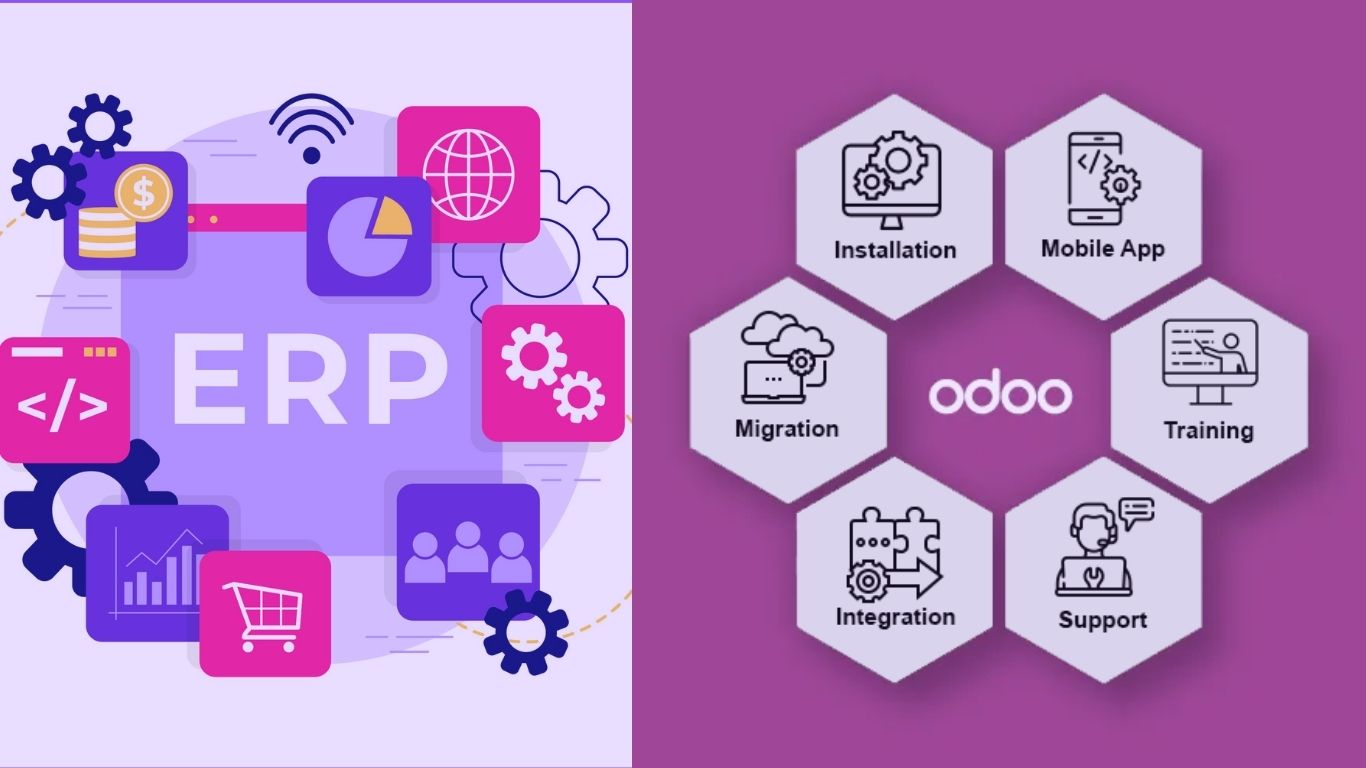
How Odoo Services and ERPs Help Businesses Automate Operations and Scale Faster in 2026
Introduction to Modern Odoo Services
and ERP Systems:
Running a growing
business in 2026 means dealing with more moving parts than ever before. Sales
teams need real-time inventory data. Finance needs accurate forecasts.
Operations need visibility across every department. If your teams are still
working in disconnected tools and spreadsheets, you are not just slowing down
your workflows, you are actively limiting your growth.
This is exactly where
Enterprise Resource Planning (ERP) systems have become non-negotiable for
serious businesses.
What ERP Means Today:
An ERP is no longer
just a large enterprise software suite that takes 18 months to deploy. Modern ERP systems are
modular, cloud-friendly, and designed to bring every business function under a
single, unified platform. Think of it as the central nervous system of your
business. When it works well, every department communicates in real time,
decisions are based on accurate data, and manual work drops significantly.
The Role of
Automation in Business
Automation is not
about replacing people. It is about eliminating repetitive, low-value tasks so
your team can focus on work that actually drives revenue. Businesses that have
integrated ERP-driven automation report shorter sales cycles, fewer billing errors,
and faster inventory turnover. In competitive markets across the US, that
operational edge is the difference between scaling and stalling.
How Odoo ERP Transforms Business
Operations:
Among all the
enterprise resource planning solutions available today, Odoo has earned its
place as one of the most adaptable and cost-effective platforms for small to
mid-sized businesses.
Unified Platform
for All Departments
Odoo
offers a modular system
covering CRM, accounting, inventory, HR, project management, purchasing, and
more, all in one platform. Instead of your sales team using one tool, your
warehouse using another, and your accountants using a third, Odoo connects
everything. Data flows automatically from one module to the next, which
eliminates duplicate entries, reduces errors, and saves hours every week.
For a business in
Atlanta or operating across multiple US locations, this kind of centralized
visibility is invaluable. You can see what is happening in your warehouse,
track open invoices, monitor employee performance, and review campaign results,
all from a single dashboard.
Real-Time Reporting
and Analytics
One of the strongest
competitive advantages Odoo delivers is real-time business analytics. Instead
of waiting for month-end reports, decision-makers can pull live data at any
moment. If inventory is running low on a high-demand product, the system flags it.
If a sales rep is falling behind on targets, the manager sees it in real time.
This speed of insight directly improves the quality and timing of decisions,
which is critical in fast-moving business environments.
Key Odoo Services
That Drive Growth
Implementing Odoo is
not a plug-and-play exercise. To get real results, you need experienced
partners who understand both the platform and your business model. This is
where professional Odoo services become essential.
Odoo Consulting
Services
Before any deployment
begins, Odoo consulting
services focus on understanding how your business operates. A qualified
Odoo consultant will conduct a thorough business analysis, map out your
existing workflows, identify gaps, and build an ERP strategy tailored to your
goals.
This phase is critical
because it prevents a very common mistake: buying a powerful platform and then
configuring it to replicate your old broken processes. Good consulting means
designing a system that improves your operations, not just digitizes them. At
Software4.net, this is where every Odoo project starts, with clarity on what
you need and a roadmap to get there.
Odoo Implementation
Services
Odoo implementation
services cover the full technical setup and deployment of your ERP system. This includes
selecting the right modules for your business, configuring workflows, migrating
existing data from your old systems, integrating Odoo with any third-party
tools you currently use, and running thorough testing before go-live.
A well-executed
implementation minimizes downtime and ensures your team can hit the ground
running on day one. Cutting corners at this stage is where many businesses run
into trouble later, which is why working with an experienced Odoo
implementation company matters.
Odoo Support and
Maintenance
The work does not stop
after deployment. Odoo support and maintenance services ensure your system
continues to perform as your business grows and evolves. This includes ongoing
optimization, resolving technical issues, rolling out new modules when needed,
and keeping the platform updated.
Performance monitoring is a part of this as well. A good support partner will proactively identify bottlenecks before they become problems, keeping your operations always running smoothly.

Automation Benefits of Odoo ERP
Let us get specific
about what automation through Odoo delivers for your business.
Reduced Manual Work
Every time an order is
placed in your Odoo-connected store, the system can automatically generate the
invoice, update inventory, trigger a warehouse pick list, and schedule
delivery, all without a single manual input. That kind of end-to-end
automation, across the full order lifecycle, is where businesses recover
significant hours every week.
Faster Decision
Making
When all your data
lives in one place and updates in real time, your leadership team no longer
needs to wait on reports from multiple departments. They have the information
they need to act quickly, whether that is approving a large purchase order,
reallocating inventory, or adjusting a sales strategy mid-quarter.
Improved Customer
Experience
Automation directly
improves how customers experience your business. Orders are fulfilled faster.
Communication is more consistent. Support tickets are tracked and resolved
efficiently. When your backend operations are running well, your customers feel
the difference on the front end.
Odoo ERP Use Cases
by Industry
Odoo is built to be
flexible, and that flexibility shows across very different industries.
eCommerce
Automation
For online retailers,
Odoo connects your storefront directly to your inventory, fulfillment, and
accounting systems. When a product sells, stock levels update automatically.
When inventory drops below a set threshold, a purchase order is triggered.
Returns are processed within the same system. This level of automation keeps
eCommerce operations lean and accurate even at high order volumes.
Manufacturing
Optimization
Manufacturers use Odoo
to manage production planning, bills of materials, work orders, and quality
control in one place. Real-time visibility into production schedules and
material availability means fewer delays and better resource allocation.
Businesses can track costs at each stage of production and identify
inefficiencies before they compound.
Service Business
Workflows
For service-based
businesses, consultancies, agencies, and professional firms, Odoo handles
project management, time tracking, invoicing, and client communications in a
connected workflow. Billing becomes faster and more accurate because time logs
and project milestones connect directly to the invoicing module.
Common Challenges in ERP
Implementation:
Being realistic about
what can go wrong is part of making it go right. Here are the most common
obstacles businesses face during ERP adoption.
Data Migration
Issues
Moving years of data
from legacy systems into a new ERP is one of the most technically demanding
parts of any implementation. Incomplete data, inconsistent formats, and missing
records can all cause problems if not handled carefully. Proper data auditing
and a structured migration plan are essential.
User Adoption
Challenges
The best ERP in the
world delivers no value if your team does not use it properly. Resistance to
change is natural, especially when people have been working the same way for
years. Investing in thorough training and clear internal communication about
why the change is happening makes a measurable difference in adoption rates.
Integration
Complexities
Many businesses
already have existing tools such as payment gateways, marketing platforms, or
industry-specific software that need to work alongside Odoo. Mapping out these
integrations in advance and testing them carefully before go-live prevents
disruptions after deployment.
Best Practices for
Successful Odoo Implementation
If you are planning an
Odoo deployment, these practices separate successful rollouts from the ones
that stall.
Define Clear Goals
Start with specific
outcomes in mind. Do you want to cut invoice processing time by 50%? Reduce
inventory discrepancies? Shorten your sales cycle? Clear goals make it easier
to measure success and help your implementation partner configure the system in
a way that serves those outcomes directly.
Choose the Right
Modules
Odoo has over 30 core
modules and hundreds of community apps. Starting with every module available is
a mistake. Begin with the modules that address your most pressing operational needs
and expand as your team becomes comfortable with the platform.
Invest in Training
Training is not a
one-time event. It should be built into your implementation timeline and
revisited as new team members join or new modules are added. Businesses that
treat training as an ongoing investment consistently see better long-term
results from their ERP systems.
Why Businesses
Prefer Odoo Over Traditional ERPs
Traditional ERP
systems from legacy vendors often come with enormous licensing fees, rigid
architectures, and implementation timelines that stretch across years. Odoo
changes the equation in three meaningful ways.
Lower Cost
Odoo's pricing model
is significantly more accessible than enterprise-tier competitors. Businesses
pay for the users and modules they really need, without locking into expensive
long-term contracts for functionality they will never use.
Open-Source
Flexibility
Because Odoo is open
source, it can be customized at a deep level to match unique business
requirements. This is a major advantage for businesses in specialized
industries or those with complex workflows that off-the-shelf software cannot
accommodate.
Easy Scalability
As your business grows, your ERP should grow with it. Adding new users, activating additional modules, or expanding to new locations requires no platform overhaul with Odoo. It scales progressively, which makes it a long-term asset rather than a system you outgrow.

Final Thoughts: Is Odoo ERP Right for
Your Business?
If your business is
dealing with disconnected systems, growing operational complexity, or a team
that spends too much time on manual work, Odoo is worth serious consideration.
It is not the right fit for every organization, but for small to mid-sized businesses
that need a scalable, flexible, and cost-effective ERP, it stands out clearly.
The key is partnering
with an implementation team that knows both the platform and your industry. A
rushed or poorly planned ERP deployment creates more problems than it solves.
Done right, it becomes the foundation your business runs on for years.
Software4.net, based in Atlanta, GA and serving businesses
across the United States, provides end-to-end Odoo services including
consulting, implementation, and ongoing support. If you are evaluating your ERP
options or ready to move forward with a deployment, the team at Software4.net
can assess your current setup and build a roadmap that fits your goals.
Ready to see how Odoo can work for your business? Contact Software4.net today to schedule your free consultation.
FAQs:
It automates workflows, centralizes data, and reduces manual processes, leading
to faster and more accurate operations across sales, finance, inventory, and
HR.
2. What industries benefit most from Odoo ERP?
Retail, manufacturing, healthcare, and service-based businesses benefit the
most due to Odoo's flexible and industry-adaptable modules.
3. Is Odoo ERP cloud-based or on-premises?
Odoo supports both cloud and on-premises deployments, giving businesses the
flexibility to choose what works best for their infrastructure and security
requirements.
4. What is the cost of Odoo ERP services?
Costs
vary depending on the number of users, modules selected, level of
customization, and implementation complexity. Software4.net offers transparent
pricing based on your specific needs.
5. Do I need technical expertise to use Odoo?
No. While Odoo is a feature-rich platform, it is designed with usability in mind. With proper onboarding and support from an experienced provider like Software4.net, your team can adopt it smoothly without needing a technical background.
Most Recent
-
 Why Every Alpharetta Business Needs an SEO Expert (And How to Find the Right One)29th May 2026 3
 -
 SEO Trends 2026 for Home Improvement and Local Businesses: What's Changed Now1st May 2026 76
 -
 SEO Trends 2026 for Home Improvement and Local Businesses28th April 2026 127
 -
 PPC Marketing for Small Business- How to Choose the Best PPC Company in the USA and Stop Wasting Your Ad Budget24th April 2026 85
 -
 Digital Marketing with AI Automation- How Smart Businesses Are Scaling Faster in 202622nd April 2026 104